Ethiopia: A Pilgrimage Like No Other
For nearly two thousand years, Christians have journeyed to places made sacred by the life of Jesus Christ. They have prayed in Bethlehem, stood beside the Sea of Galilee, climbed the Mount of Olives and walked the streets of Jerusalem, tracing His footsteps and reflecting on the events that transformed human history. These remain among the most important pilgrimages in the Christian world.
A pilgrimage to Ethiopia offers a different kind of encounter. It does not primarily invite us to follow where Christ once walked. It invites us to encounter what Christ left behind: an ecclesial inheritance rather than a historical trace, a Church whose worship, memory and communal life have continued across generations without interruption. Other Christian destinations preserve the past. Ethiopia continues to practise it. Pilgrims often put the difference simply: in the Holy Land, they trace the trail of scripture and of Christ. In Ethiopia, they live Christ within His Body, the Church, a communion that has never ceased to gather, chant, fast and pray since the age of the Apostles.
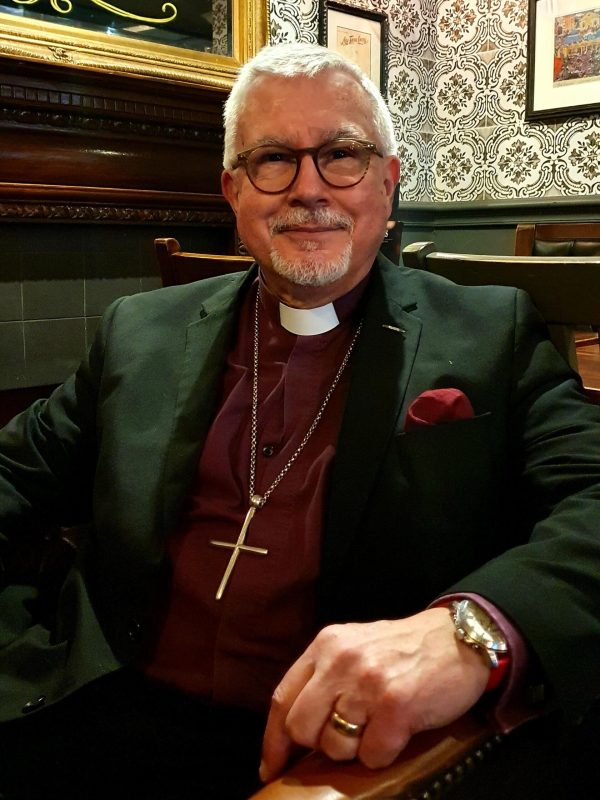
This is not a claim we make lightly, and we would rather let a pilgrim’s own testimony bear witness to it than our own words. Pastor Aaron Campbell of Antioch Christian Fellowship has served in ministry for thirty years and has stood in Jerusalem at the site believed to mark Christ’s crucifixion, where the Incarnation reached its culmination in the Passion. After leading a pilgrimage group through Ethiopia, he offered this account: “I have served the Lord for thirty years, and I stood where He was believed to have been crucified. God truly met me there in Jerusalem. But God met me in Ethiopia in an even greater way. I encountered the risen Christ through the Ethiopian congregation and the saints of St. Lalibela.”
In Ethiopia, this inheritance does not belong to a single sacred site. It is a national fabric in which fasting, feast, procession and prayer remain part of ordinary life, in the cities and in the smallest highland parish alike. Before dawn breaks over the highlands, church bells call communities to prayer. Priests chant the ancient liturgy in Ge’ez exactly as it has been passed from teacher to student for centuries. Pilgrims wrapped in white cotton shawls walk long distances on foot to reach a church before dawn. Monasteries remain places of prayer, not museums with opening hours.
A pilgrim in Ethiopia does not observe history. They are received into it, as a guest at a table that has never stopped being set. We keep the pace unhurried, so that this encounter has room to settle rather than passing in a blur of sites. Ethiopia rewards a pilgrim who stays long enough to notice its rhythm, and that is exactly what we design each journey to allow.
From Orit to Gospel: A Faith Understood as Continuity
The Ethiopian Orthodox Tewahedo Church understands itself as having a spiritual history extending across three thousand years. Within this tradition, the nation lived for centuries according to the Orit, the covenantal teaching and practice associated with the Old Testament, before embracing the Gospel in the Apostolic age.
The Queen of Sheba’s journey to Jerusalem, the Solomonic tradition, the reverence for the Ark of the Covenant and the continuing place of Old Testament practice are not treated merely as ancient legends. They form part of a living spiritual memory that still shapes worship, identity, fasting, sacred art and community life.
Ethiopia did not simply receive Christianity as something foreign. It transitioned into Christianity. The coming of Christ was understood not as the rejection of an earlier sacred life, but as its fulfilment.
For the pilgrim, this changes the meaning of the journey. Whether visitors share every theological claim of this tradition or simply approach it with openness, they encounter a Church with an extraordinary sense of spiritual inheritance: history still at prayer, not history preserved behind glass.
Entering a Living Church
Entering one of Ethiopia’s ancient churches is unlike entering almost any other sacred building. Before crossing the threshold, pilgrims remove their shoes, recalling God’s words to Moses before the burning bush: “Take off your sandals, for the place where you are standing is holy ground.” This is the ordinary discipline of the Church, not a gesture arranged for visitors.
Inside, the scent of frankincense hangs in the air. Ancient hymns rise from voices carrying melodies passed from one generation to the next. Priests move through the sanctuary with processional crosses. Drums and sistrums accompany chants that belong to an unbroken act of worship. The visitor enters a community already at prayer, and is invited to encounter another expression of the Christian faith with reverence and openness.
What This Journey Gives Back
This is not an occasional response. Over decades of organising these journeys, one pattern repeats itself with striking consistency: pilgrims come home and find they cannot stop talking about what happened to them. Many begin asking themselves, quietly and seriously, what they had been doing with their faith until now. Pilgrims often describe it simply: nothing else has come close.
The pace slows, often within the first day, and silence stops feeling uncomfortable. Familiar scripture is encountered again through unfamiliar landscapes and unfamiliar customs, and it tends to read differently afterwards. Hospitality is offered so consistently, and so far beyond what circumstance would require, that it starts to feel like grace rather than service. Fasting and long hours of standing in worship ask something physical of the pilgrim, and that physical cost has a way of deepening what is received.
For faith leaders, this is often the most valuable gift of all: a rare permission to stop leading. For the length of a pilgrimage, there is nothing to organise, no one to counsel, no service to prepare. There is only the discipline of listening, receiving and being renewed, before returning home to lead again with something restored.
Pilgrims consistently describe carrying this renewal home rather than leaving it behind in Ethiopia: a steadier prayer life, a new patience with silence, a fresh humility learned from being received as a guest rather than treated as an expert, and a deepened conviction about their own faith’s place within the wider Christian family. These are not souvenirs. For many pilgrims, they mark a before and after in how they understand their own belief.
A pilgrimage supports the churches and communities who host it, and that support matters to us deeply. But the larger benefit has always belonged to the pilgrim. What they carry home is worth more than anything the journey costs them to take.
How We Travel Responsibly
A Tadele Travel pilgrimage is not a theological debating platform. Pilgrims come to celebrate another family of the Christian faith, the ancient mother church, not to argue or to tell one another who is right. Hosts welcome pilgrims to share what they have, and pilgrims come to receive it with humility. This is not a modern accommodation. Our ancestors met one another this way for centuries, and we continue in that same manner.
We carry this posture into every practical detail of a pilgrimage. We protect worship from intrusive photography or performance, and we shape each encounter around the rhythm of the receiving community rather than the visitor’s convenience. Groups stay considered in size, so that presence never becomes intrusion.
Our Fair Share
Long before it was good business practice, sharing food with those who had travelled far, or who had little, was simply part of how our communities lived. Preparing and distributing food to celebrate together, and to provide for the traveller and the person of limited means, has always been part of that hospitality. On pilgrimage, our travellers often cook alongside their local hosts, and that same hospitality is extended not only to fellow pilgrims but to residents in the community who are themselves short of means.
Through our Fair Share model, we protect and extend that custom. We build journeys around trusted local relationships, appropriate permission and fair reward for the clergy, guides, hosts, cooks and artisans who make each pilgrimage possible. This reciprocity matters. The pilgrim receives something of lasting value, while their presence contributes fairly to those who preserve and live the spiritual heritage they have come to encounter.
Begin Your Own Pilgrimage
Wherever your congregation, parish, fellowship or community calls home, Ethiopia offers the same invitation. Come not simply to trace where Christianity once travelled. Come to encounter a faith that never stopped living. Come as a traveller. Return as a pilgrim.
We would be delighted to help you shape your own pilgrimage through Ethiopia’s faith. Read how we design church pilgrimages, review our practical pilgrimage information, or begin a pilgrimage conversation.